Best Music Festivals in the World 2026
Ranking festivals is a fool's errand — a rainy Sunday at Glastonbury still beats a perfect weekend at most events, and someone's life-changing Fuji Rock moment is another person's expensive jet lag. But this list isn't about personal taste. It's about which 15 events consistently deliver things you genuinely can't replicate: production that sets the industry standard, lineups that take risks and still fill a field, and a sense of place so specific that the festival becomes inseparable from where it happens. These are the ones worth booking a flight for.
Glastonbury Festival
No festival has earned its reputation more honestly than Glastonbury. Worthy Farm in Somerset has hosted this since 1970, and it's grown to around 210,000 people across five days in late June — the largest greenfield performing arts festival on earth. The Pyramid Stage gets all the press, but Glastonbury's real value is in the density of everything else: Shangri-La's late-night club district, the West Holts stage for jazz and soul, the Arcadia spider structure, the stone circle where people watch the sun rise without any scheduled act. The festival goes fallow every fifth year to rest the farmland. Tickets move via a registration-and-ballot system and are gone within an hour of going on sale. If you don't have a registration number by now, sort that out before doing anything else.

Tomorrowland
Belgium's Tomorrowland is the most technically ambitious festival on this list. 400,000 people attend across two consecutive weekends in Boom, each one getting the same rebuilt mainstage — a multi-story themed structure that changes every year and costs more to construct than most festivals spend on their entire production budget. The DreamVille camping area offers accommodation tiers from standard tents up to furnished chalets. Lineup-wise, it covers every corner of electronic music: techno, trance, house, hardstyle, all running simultaneously across a dozen stages. Is it overwhelming? Yes. Is the production borderline absurd? Also yes. It's still one of the most impressive things in live music.

Coachella
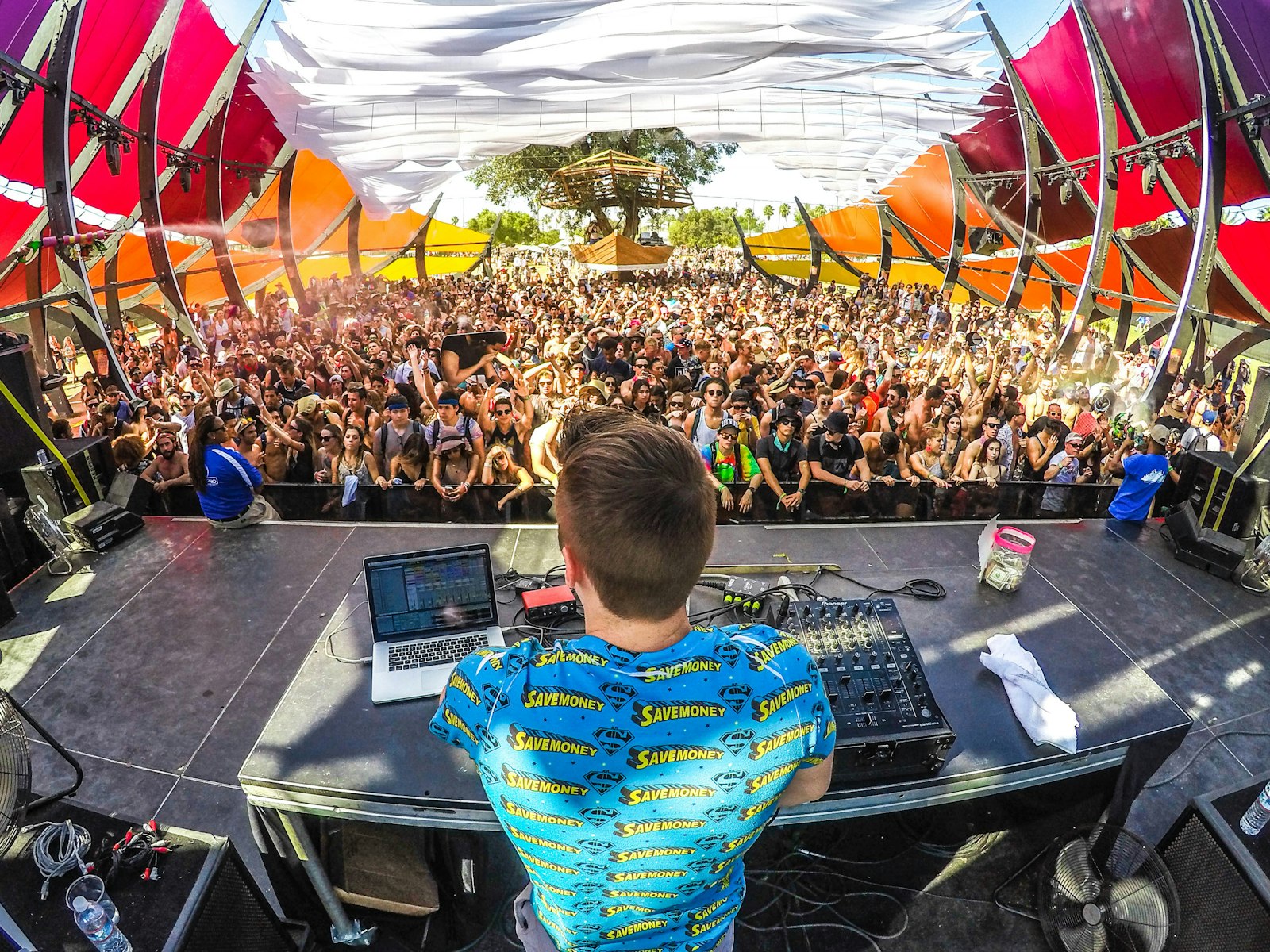
Coachella runs two identical weekends in April in the Coachella Valley, Indio, California — roughly 125,000 people per weekend at the Empire Polo Club. The weather is unambiguous: dry desert heat, often above 100°F in the afternoons, cooling sharply after dark. The festival's cultural influence remains disproportionate to its size. Headline slots here generate more media coverage than comparable performances anywhere else, and the art installations — large-scale commissioned works spread across the polo fields — have attracted artists like Olafur Eliasson and Ai Weiwei. Camping is available but most attendees stay in Palm Springs or Indio and shuttle in. Weekend 1 sells out first; Weekend 2 tends to have slightly more availability.
Fuji Rock Festival
Fuji Rock is the best-organized festival in the world. That's not hyperbole — it's what you hear from almost every touring production crew that works it. Held at Naeba Ski Resort in Niigata Prefecture, Japan, it draws around 40,000 people over three days in late July to a mountain site accessible only by gondola and forest boardwalk. The Green Stage, Red Marquee, and White Stage are spread across the terrain in a way that makes walking between sets part of the experience. Japanese festival culture means zero litter, zero aggression, and food quality that makes British festival catering look like a punishment. The lineup mixes global headliners with Japanese acts that most international audiences will discover here for the first time. Book accommodation in Yuzawa early — the surrounding onsen towns fill up.

Primavera Sound
Barcelona's Primavera Sound has spent two decades building what might be the most credible mainstream festival booking operation anywhere. The Parc del Fòrum site holds around 70,000 daily, with stages set against the Mediterranean — the Main Stage faces the sea, which makes the golden-hour sets something else entirely. The festival runs in early June and has expanded to a second city, Madrid, in recent years. What makes Primavera different from other large festivals is the booking philosophy: they'll put a 90s indie band next to a hyperpop act next to a jazz artist on consecutive stages without the lineup feeling incoherent. They trust their audience. VIP options are available but the general admission experience is genuinely good.

Roskilde Festival
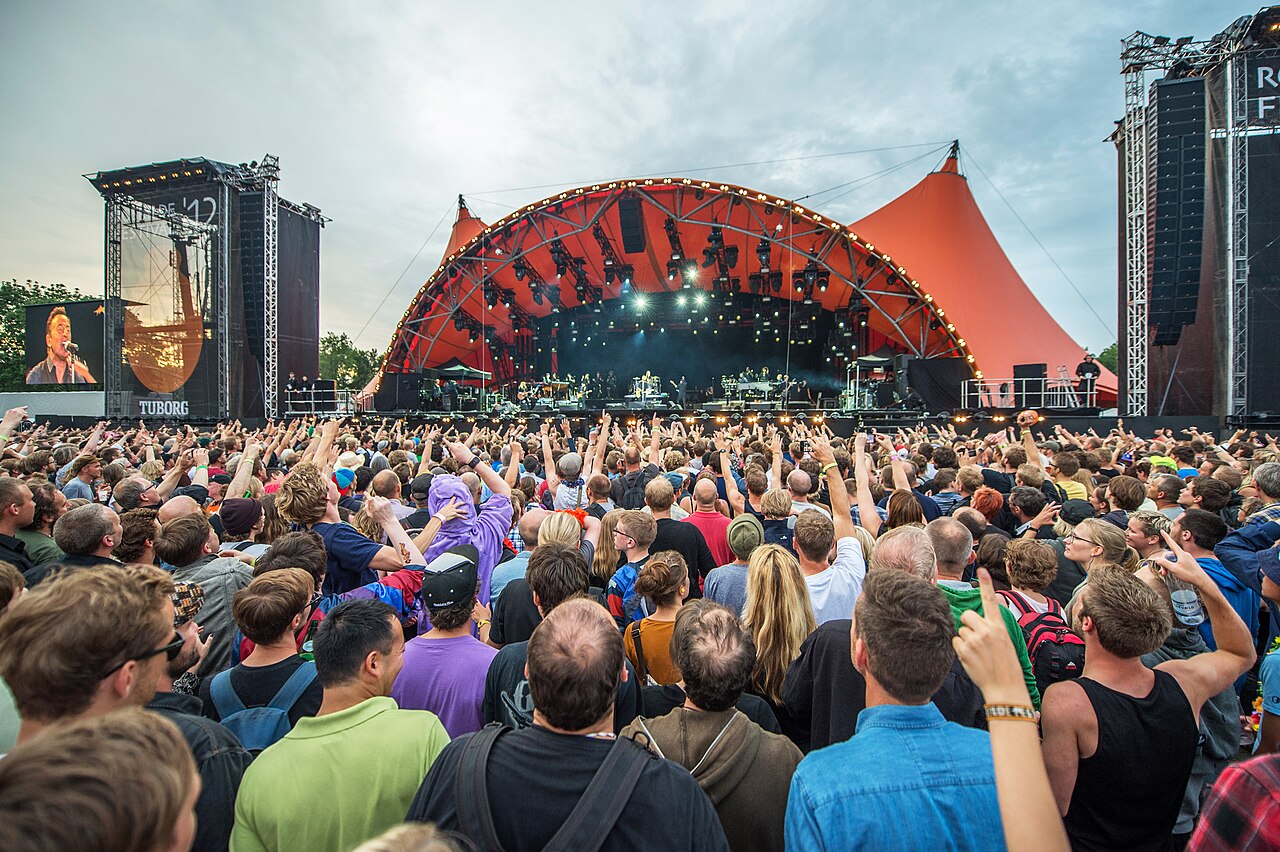
Denmark's Roskilde is a nonprofit, which changes everything about how it operates. All proceeds fund humanitarian and cultural causes — more than DKK 400 million donated since 1971. Around 130,000 people come to the site west of Copenhagen for eight days in late June and early July. The Orange Stage is Northern Europe's largest outdoor stage. The booking is adventurous in a way that commercial festivals can't afford to be: they'll give a 40-minute set to an artist with 12,000 monthly listeners on the same bill as a platinum headliner and treat both with equal seriousness. The camping culture at Roskilde is its own phenomenon — themed camps that self-organize months in advance, warm-up days before the music even starts. Copenhagen is 30 minutes away by regional train.
Sziget Festival
Sziget happens on Óbuda Island in the Danube in Budapest, which makes it the only major festival where the site itself is genuinely a destination. 500,000 people attend over the course of a week in August, and a significant proportion come for the full seven days rather than a single weekend. It's the largest festival in Europe by total attendance. The lineup covers pop, rock, electronic, and world music with consistent quality at the top — past headliners include Dua Lipa, Arctic Monkeys, and Kendrick Lamar. Budapest adds something no other city on this list offers: one of Europe's most beautiful capitals for under 20 minutes from the festival site, with accommodation ranging from cheap hostels to design hotels.
Burning Man
Burning Man isn't technically a music festival, but pretending it belongs in a separate category misses the point. Around 70,000 people build Black Rock City in the Nevada desert each year for a week in late August — a fully functional temporary city laid out on a grid, with streets, infrastructure, and art installations at a scale that dwarfs most permanent installations. The music is everywhere: deep house and techno in the mutant vehicles, 808s echoing from sound camps at 4am, ambient drone in art installations. The festival runs on a gifting economy; nothing is bought or sold except coffee and ice. The Leave No Trace requirement is non-negotiable. It's the most physically and logistically demanding event on this list, and also the one people talk about for the rest of their lives.
Sónar
Barcelona's Sónar runs for three days in mid-June and operates across two formats: Sónar by Day (indoor, in the Fira Montjuïc exhibition halls) and Sónar by Night (outdoor, at Fira Gran Via). Around 120,000 people attend across the full event. The festival focuses on electronic and experimental music, and it takes the experimental part seriously — Sónar doesn't just book the current headliners, it consistently puts artists on stages before the wider industry catches up with them. There's also SónarPro, a music industry conference running in parallel. It's a genuinely intellectual festival in a way that sounds insufferable but isn't. The split day/night format means you can structure the experience around your own tolerance for club-level darkness at noon.

EXIT Festival
EXIT happens inside a 17th-century fortress. The Petrovaradin Fortress in Novi Sad, Serbia has walls thick enough that the techno from the Dance Arena doesn't reach the acoustic stages — which says something about both the architecture and the sound system. Around 200,000 attend across four days in early July. The site's geography means every stage has a different character: the Main Stage sits in the fortress moat, the Dance Arena occupies a brick-walled courtyard, and smaller stages are tucked into tunnels and battlements. EXIT is one of the few festivals of this size where the production quality significantly exceeds the ticket price. Novi Sad is two hours from Belgrade by bus, with budget accommodation in both cities.
Bonnaroo
Bonnaroo runs on a 700-acre farm in Manchester, Tennessee in June, drawing around 80,000 people for four days. It started in 2002 as primarily a jam band festival and has evolved into one of the most genre-agnostic large festivals in the US — a single weekend can include hip-hop headliners, country acts, electronic artists, and legacy rock without any of it feeling forced. The site has permanent infrastructure, which means better-than-average camping facilities. The heat and humidity of a Tennessee June are real factors; the afternoon slot before sundown is survivable, but midday sets require planning. Bonnaroo does comedy and comedy-adjacent programming better than most music festivals, and the SuperJam concept — surprise collaborations between touring artists — produces genuinely unrepeatable performances.

NOS Alive
Lisbon's NOS Alive runs for three days in July at Passeio Marítimo de Algés, a site on the Tagus estuary about 10 minutes from central Lisbon. Capacity is around 35,000 daily. The lineup trends indie, alternative, and rock at the headline level, with electronic and pop stages filling in the rest. What NOS Alive offers that similar-sized European festivals don't is the city itself: Lisbon in July is one of the best places in Europe to be, the food within walking distance of any accommodation is excellent, and accommodation costs remain lower than comparable festival cities. The Tagus stage, positioned closest to the water, has one of the better natural backdrops of any festival stage in Europe.
Boom Festival
Boom is biennial, happening in even years on the shores of Lake Idanha-a-Nova in central Portugal. It's not for everyone — the festival sits within the psychedelic trance and transformational festival tradition, which comes with its own vocabulary (Healing Area, Sacred Fire, Liminal Village) that can feel opaque from the outside. But Boom has produced some of the most thoughtful festival infrastructure anywhere: greywater recycling systems, solar power for stages, composting toilets that actually work, a permaculture garden. Around 35,000 attend for eight days in late July and early August. The Dance Temple, an open-air circular dancefloor with a hand-built wooden structure and a sound system that costs as much as some festival headliners, is genuinely one of the best places to experience electronic music on earth.
Splendour in the Grass
Australia's premier music festival, Splendour in the Grass runs over three days in late July in North Byron Parklands, about 20 minutes south of Byron Bay. The July timing is Australian winter, which means mild temperatures and long daylight hours rather than the extreme heat that complicates summer festivals in the Northern Hemisphere. Capacity is around 35,000 daily. The booking tends toward indie, alternative, and hip-hop, and Splendour frequently books international artists who don't tour Australia otherwise — making it the primary access point for many Australian audiences to see major international acts. The Byron Bay location adds an obvious bonus for anyone who can extend the trip.
Lollapalooza
The original touring festival that went permanent in Chicago's Grant Park in 2005, Lollapalooza now draws around 100,000 people daily over four days in late July and early August. The location is arguably the best of any US festival — right in the middle of a major city, surrounded by hotels, restaurants, and the entirety of Chicago. The lineup has always prioritized mainstream accessibility, which makes it reliable rather than surprising. Lollapalooza doesn't take many booking risks, but it delivers on the headliners consistently. The festival has also expanded internationally — versions now run in Brazil, Chile, Argentina, France, Germany, Sweden, and India — but the Chicago original remains the flagship. For first-time festival-goers, the combination of city infrastructure and strong production makes it one of the more forgiving introductions to large events.

How to Use This List
These 15 festivals cover five continents and run across ten months of the year — January's Coachella registration ballot through November's post-festival planning. They don't all serve the same purpose. Glastonbury and Fuji Rock reward the committed; Coachella and Lollapalooza suit people who want a strong lineup without a camping-only experience. Boom and Burning Man are genuinely transformative but require preparation that a three-day rock festival doesn't. Pick the one that matches what you're actually trying to do, book early, and register for whatever ballot systems apply. The worst outcome is wanting to go and finding out in March that tickets sold out in October.