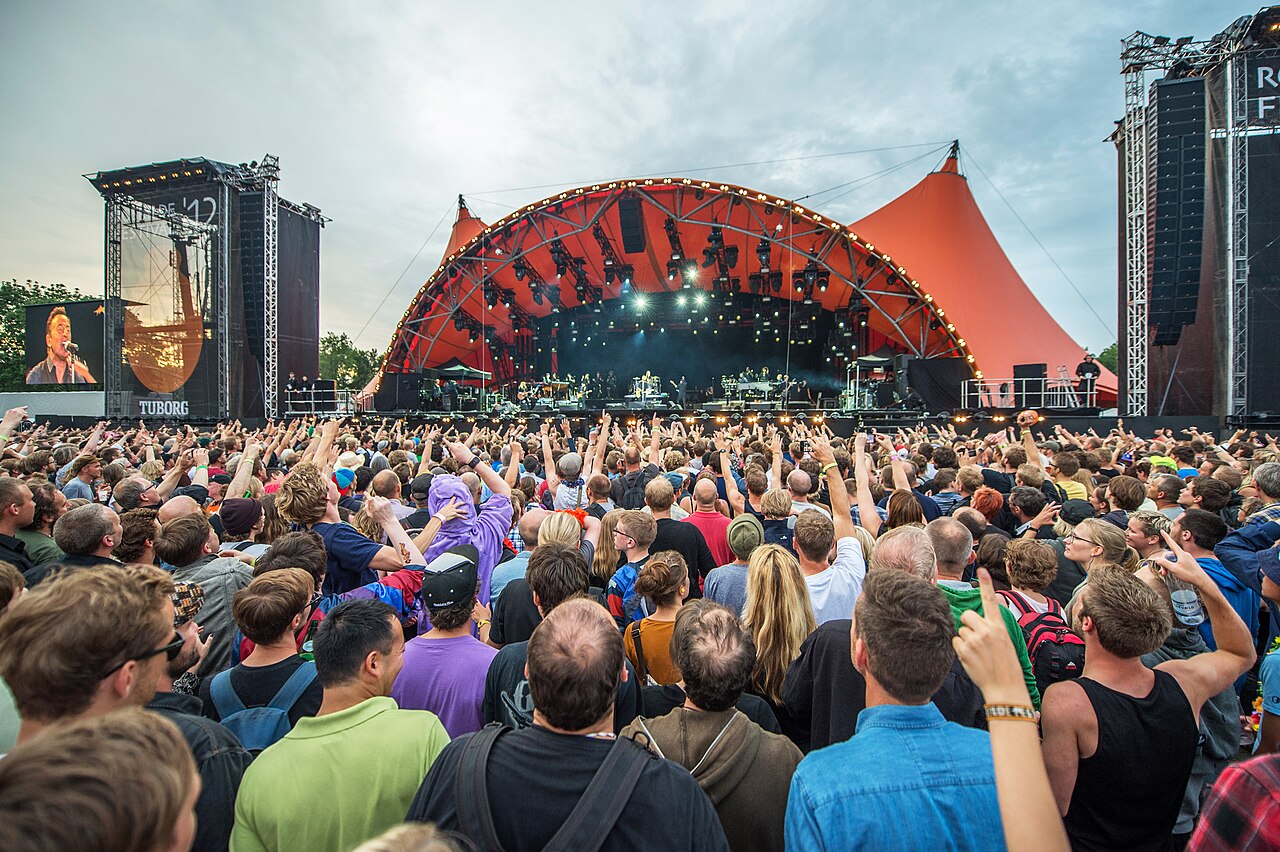
The first international festival trip tends to go one of two ways. Either the whole thing clicks — the travel, the campsite, the strangers you end up spending four days with — and you spend the next six months planning the next one. Or something goes wrong in a way that a domestic trip absorbs without drama, and you write the whole category off as more trouble than it's worth. The difference between those two outcomes is almost never the festival itself. It's the order in which you made decisions.

Most guides to this give you a checklist. Passport, travel insurance, euros. That's not what this is. This is the planning logic: what to decide first, what to leave open, where the mistakes actually happen, and which three festivals in Europe are the most forgiving places to figure all of this out.

## Book the ticket before you book anything else

This sounds obvious until you watch a group of friends spend three weeks in a group chat debating whether to go, during which time the early-bird tickets sell out and the cheapest flights disappear. The ticket is the commitment that makes every other decision real. Buy it first.

European festivals release tickets in waves, typically starting six to ten months before the event. Early-bird tiers are not a marketing gimmick — the price difference between the first release and the door price can be forty to sixty percent. For a multi-day camping festival, that's a meaningful sum before you've bought a single drink.

The corollary: do not book flights before you have a ticket. Flight prices are dynamic and will move. Festival tickets for the most popular events do not come back once they're gone.

## The three festivals worth anchoring your first trip around

Not every festival is equally legible to a first-timer abroad. Some reward deep scene knowledge. Some require fluency in local logistics. These three have been taking in international visitors for decades and have built their infrastructure accordingly.

<FestivalCard slug="roskilde-festival-dk" />

Roskilde, in Denmark, has been running since 1971 and draws 130,000 people to a site that functions more like a small city than a festival ground. The campsite culture here is the point — Danes treat the week before the music starts as its own event, and the social infrastructure that results means a solo traveller or a small group will find community faster than almost anywhere else. The lineup spans enough genres that you don't need to be a specialist to find your footing. Copenhagen is forty minutes away by train, which means accommodation options extend beyond camping if that's not your thing. Everything is conducted in fluent English.

<FestivalCard slug="pukkelpop-be" />

Pukkelpop in Hasselt, Belgium, has been running since 1985 and sits at 66,000 capacity — large enough to have serious production values, small enough that you won't spend your entire day navigating between stages. The programming leans toward indie rock, hip hop, and electronic music, which means it draws an audience that is there for the music rather than the spectacle. Hasselt has good train connections to Brussels and Antwerp, so the logistics of getting there and back are straightforward. For a first international trip, the human scale of the site matters more than it sounds.

<FestivalCard slug="sziget-festival-hu" />

Sziget in Budapest occupies its own island on the Danube — Óbudai-sziget, a 108-hectare site the festival has used since 1993. Budapest is one of the most accessible cities in Central Europe, with cheap flights from most European hubs and a hostel scene that functions as a natural pre-festival gathering point. Sziget's lineup is genuinely broad: rock, pop, electronic, world music, heavy metal. A festival that doesn't require you to be committed to a single genre is an underrated quality when you're still figuring out what kind of festival person you are. The island site creates a contained, navigable world. You can't really get lost.

## Skip Tomorrowland for your first trip

<FestivalCard slug="tomorrowland-be" />

Tomorrowland in Boom, Belgium, is probably the first name that comes up when you tell someone you're thinking about a European festival. It's also the wrong choice for a first international trip, and the reasons are instructive.

At 400,000 attendees across multiple weekends, Tomorrowland operates at a scale that punishes inexperience. Tickets sell out in minutes via a system that requires advance registration, a fast internet connection, and a working payment method — and the secondary market prices are high enough to constitute a significant financial risk for a first-timer. The festival's accommodation packages, the most reliable way to secure a good spot, sell separately at a premium and also disappear fast. The lineup is almost entirely electronic music. If you're not already invested in that world, the festival offers very little else.

None of this makes Tomorrowland a bad festival. It's a spectacular one, and it earns that reputation. But it rewards experience — with the booking process, with the site, with the genre — that a first-timer hasn't had the chance to accumulate. Go to Roskilde first. Go to Sziget. Build the vocabulary. Tomorrowland will still be there.

## The order things go wrong

Experienced festival travellers know the problems are almost always logistical, and almost always preventable. They cluster in a few places.

**Accommodation booked in the wrong order.** If the festival has on-site camping, the campsite is almost always the best base — cheaper, closer, and socially richer than a hotel twenty minutes away. Book it when you book the ticket. Hotels near popular European festival sites fill up and inflate in price the moment tickets go on sale.

**Travel insurance treated as optional.** A festival trip involves flights, accommodation, and a ticket — three separate things that can each fail independently. A cancelled flight the day before a festival starts is not covered by your credit card's travel protection in the way you think it is. Specialist event travel insurance exists and costs less than a single round of drinks.

**Currency and cards not sorted before arrival.** This is boring and people still get it wrong. Know whether the country uses euros. Know whether your card charges foreign transaction fees. Arrive with some cash. Festival ATMs exist and have queues.

**Packing for the weather you want rather than the weather you'll get.** July and August in northern Europe are not reliably warm. Roskilde 2024 saw rain heavy enough to turn sections of the campsite into standing water. A waterproof layer takes up almost no space. Pack it.

## What to leave deliberately open

The planning instinct is to schedule everything. Resist it. The best moments at a foreign festival are the ones you didn't plan — the act you wandered into because the stage was nearby, the conversation that kept you in one place for three hours, the decision to skip the headliner and stay at the smaller stage instead.

Build a rough skeleton: know where you're sleeping, know how you're getting from the airport to the site, have a vague sense of which acts you're prioritising. Leave the rest open. A festival abroad is not a tour. You are not there to optimise. You are there to have a week that doesn't resemble your normal life, in a place you've never been, with music as the organising logic.

## Six months out, then six weeks out, then the day before

Festival planning happens in three phases.

Six months out, you make the commitments — ticket, flights, accommodation, travel insurance. These are the decisions that close off alternatives. Make them, then stop.

Six weeks out, you handle the logistics. Check your passport expiry date, sort your currency situation, look at the provisional lineup, identify two or three acts you won't miss.

The day before departure, you pack. Not earlier. Packing lists written six weeks in advance get added to and become unwieldy. Pack the day before, with a clear head, knowing what the forecast says.

Everything in between — the group chat debates, the schedule optimisation, the research spirals — is optional. Do as much or as little as serves you.

## The trip that changes how you travel

There's a version of this that ends with you standing in a field in Denmark at midnight, surrounded by people you met forty-eight hours ago, watching something you wouldn't have sought out at home. That version is available to most people who plan carefully and choose the right first event.

The festivals that make it happen aren't the ones with the biggest stages or the most famous names. They're the ones that have spent decades learning how to take in strangers and make them feel like they belong. Roskilde has been doing it since 1971. Sziget since 1993. Pukkelpop since 1985. That institutional knowledge shows up in signage, in campsite layout, in the ease with which a first-timer finds their footing.

Book the ticket first.

How to plan your first international festival trip without regrets
· 8 min read